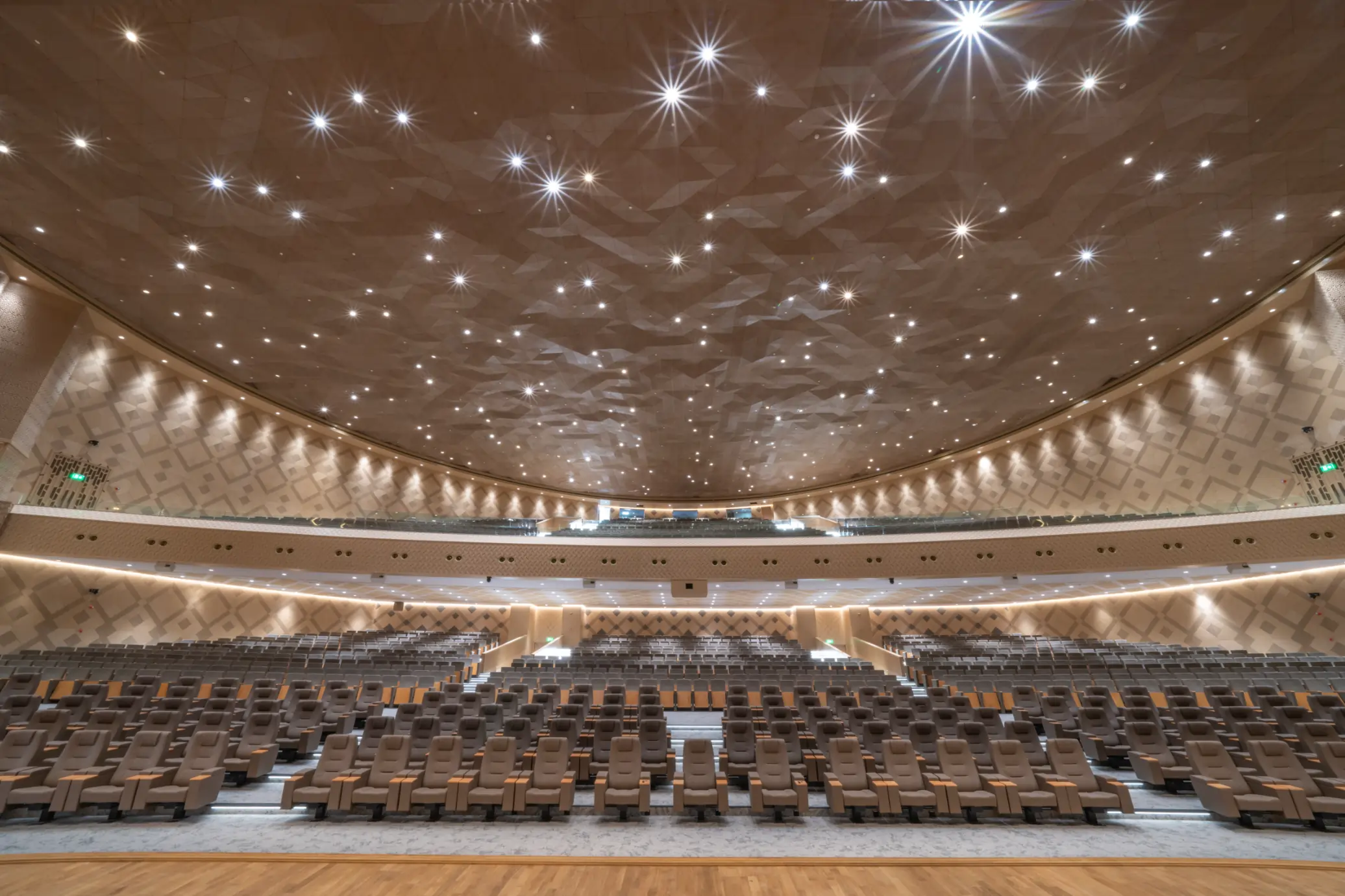
Motorised Stage Curtain Track
We know that perfect transitions and striking reveals are the enchantment of theatre. Our motorised stage curtain track systems are built for dependability and accuracy so that every movement is carried out gracefully and precisely. Designed for both straight and curved uses, our tracks allow a range of stage designs and quiet, seamless operation that improves the audience's experience. Our products provide versatility and simplicity of use with customisable control choices including interaction with current stage management systems.
Curtains that move on cue
A stage curtain has to open, close and reveal on cue, quietly and every time. We plan motorised tracks for straight and curved stages with controls that suit your stage, then coordinate supply and installation.

Planned with the stage and its acoustics
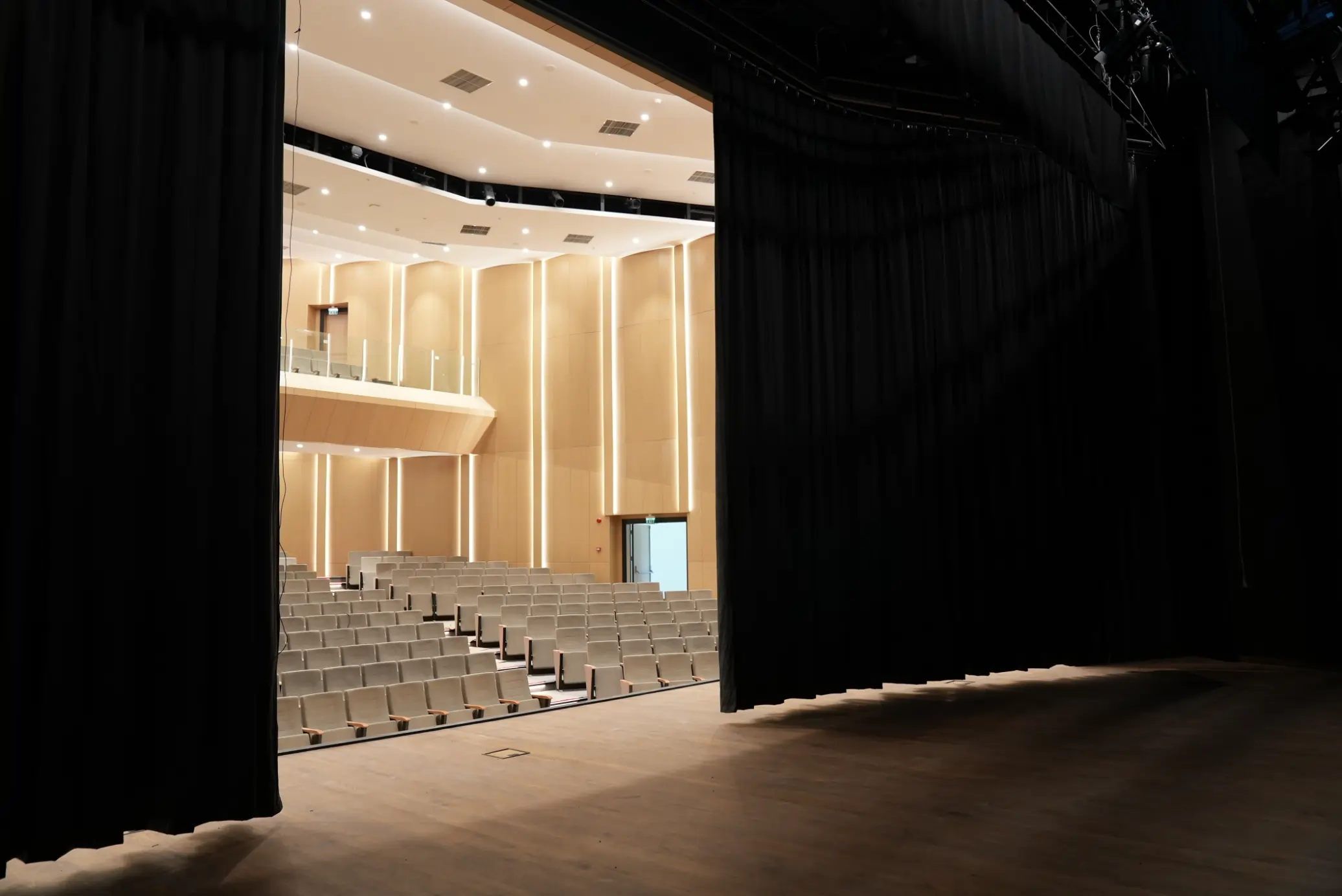
A motorised stage curtain track is planned with the stage, not added to it. We set the track line with the proscenium, the sightlines and the fly system, and because heavy curtains absorb sound, we count them in the room's acoustic design, so the hall sounds right with the curtain open and closed.
The curtain plan starts with the stage: where the main curtain, the side drapes and any travellers must sit, how they clear the lighting bars and the flown scenery, and what the audience must not see from the side seats. The track line, straight or curved, follows from that. Heavy stage curtains are among the largest absorbing surfaces in a hall, so the acoustic model is run with the curtain in both positions and the treatment is adjusted so speech and music stay balanced either way. The fixing points and loads are checked against the structure above the stage with your engineer before the track is ordered.

Equipment chosen for your stage
We work with the leading manufacturers of curtain tracks, drives and stage controls, but no single brand writes the brief. Curtain weight, travel, speed, quietness, the control your stage team needs and the service available in your country decide the shortlist, and we show the comparison with its reasons.
The specification states what the curtain must do: the weight and width it carries, how fast it opens, how quietly it runs in a silent scene, where it stops and how it is controlled, from a local panel to a link with the stage management system. We then compare candidate tracks, carriers, drives and controls against those needs and against each maker's support and spare parts in your region. Curved tracks, multiple travellers and the curtain fabric itself are specified together, because the fabric's weight and fire class decide the drive. You see the alternatives side by side and choose on facts.

One team from design to the first reveal
We plan the track, coordinate its supply and installation with your contractor and witness the commissioning on the finished stage. The same team that set the line with the rigging and the acoustics checks the fixings, the drive and the controls on site, so the curtain moves on cue from the first performance and the documentation is complete.
Curtain tracks are fixed to the structure above the stage and share that space with the fly bars, the lighting and the loudspeakers, so the installation is sequenced with them. We coordinate the specialist installer with the main contractor, check the fixing points and the cable routes against the drawings, and make sure the control position gives the operator a view of the curtain. At commissioning the travel, the speed, the stopping points and the emergency functions are tested with the real curtain, and the noise is checked from the auditorium. The records go into the handover file. Scope and responsibilities are written into the proposal.
Quiet, documented and trained
Our theatres, school halls and cultural centres were handed over with the curtain track tested, its settings recorded and the stage team trained. You receive the as-built drawings, the drive settings, the test records and the manuals, so your crew can run every reveal safely and we can support the stage as your productions change.
A curtain that moves every day needs clear records: the fixing loads, the drive settings, the inspection intervals for carriers and cables, and the procedure for a manual override. We hand these over as one file with the manuals and the commissioning results. Operator training is part of the proposal, so the stage team learns the track on their own stage, including what to check before a performance. Ask us for the venues where this was done; the stages we have delivered are the reference we point to, and we remain reachable for adjustments, fabric changes and additions as the programme grows.
The track behind every reveal


Straight and curved tracks
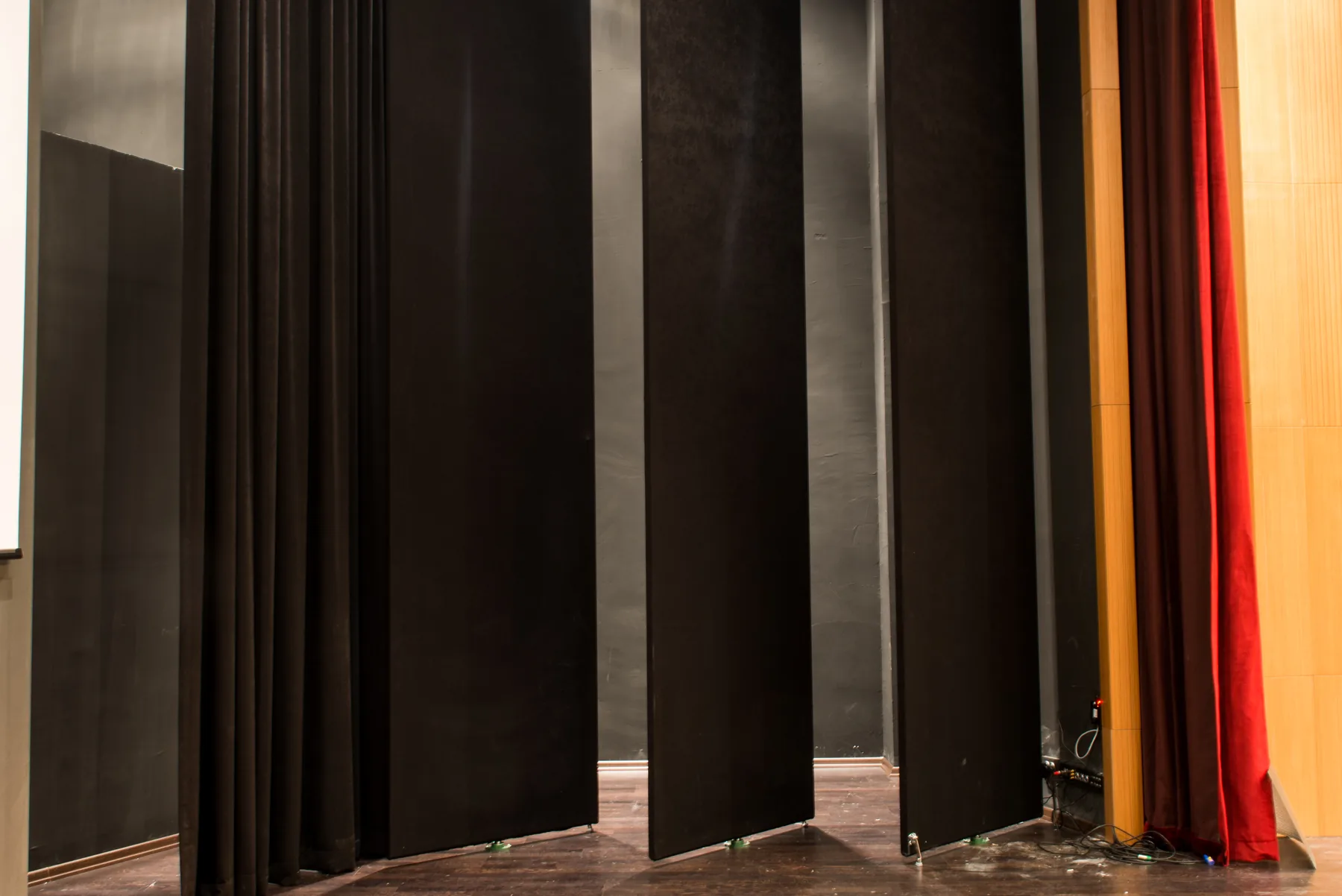
Tracks follow the stage shape, straight or curved, set on a line that clears the lighting bars and flown scenery and keeps the mechanism out of sight.

Main curtains, drapes and travellers
Main curtains, side drapes and travellers run on tracks planned for each one, so the stage can open, mask or divide where the production needs it.

Motorised drives
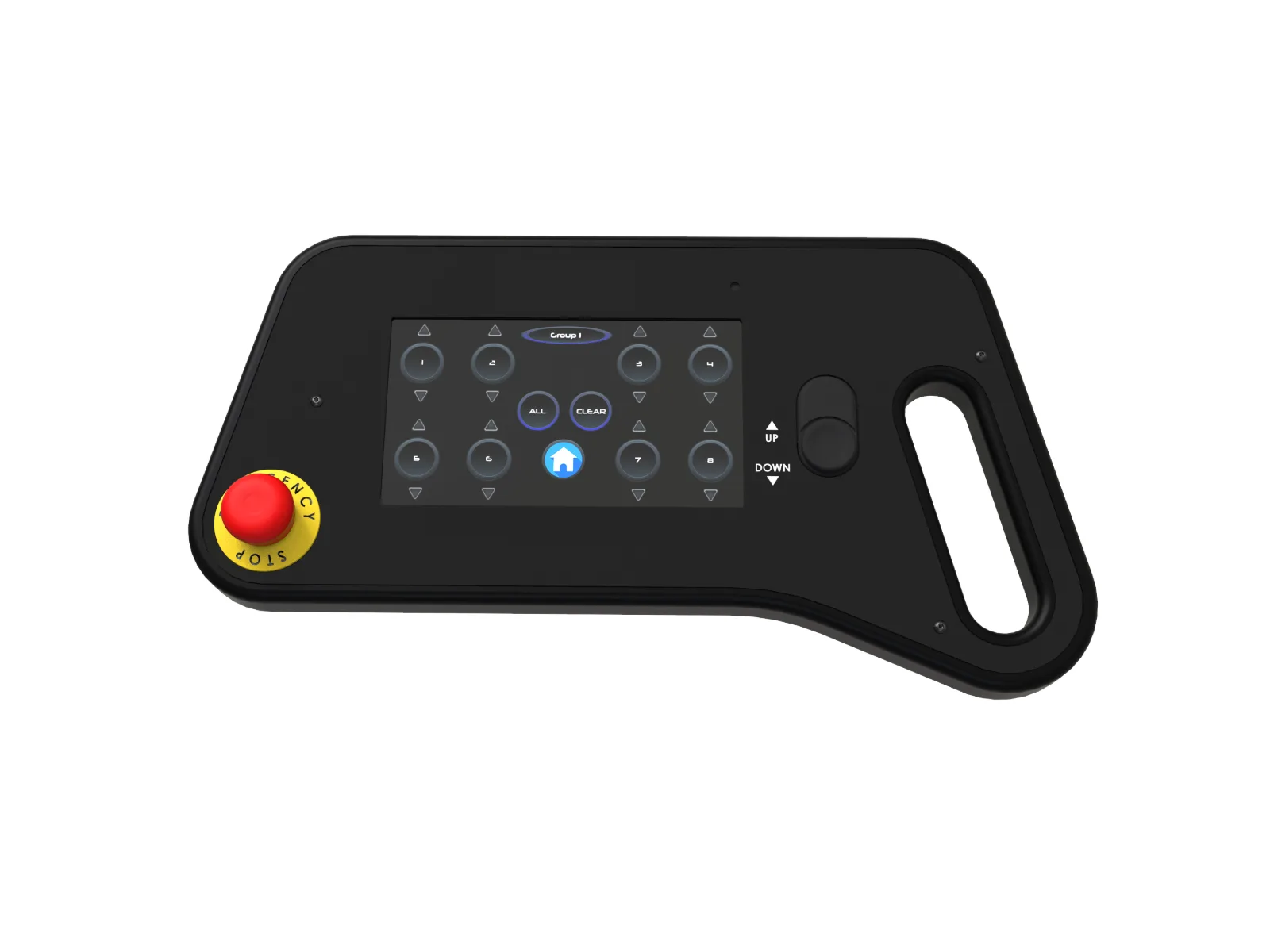
Motorised drives set the speed and stopping points of each curtain, sized for its weight and width, so movements stay smooth and quiet during a performance.

Curtain control
Control ranges from a local panel to a link with the stage management system, chosen for the way your venue runs its shows.
Complete the stage
See the rest of our stage and Pro AVL range.


Brands we specify and integrate
These are brands we specify and integrate, not a closed list. We choose by performance, reliability and fit with the room's acoustic design, then integrate everything into one system.




From first survey to final finish
Seven steps, one team, one point of contact. Book a consultation and we'll come back to you with the next step.
Five steps, one team, one point of contact. Book a consultation and we'll come back to you with the next step.

Every space starts with the brief: who sits where, how people move, and what they need to see and hear. We plan the layout around it and design the room with its acoustics and technology together, with panel positions, fixings and finishes drawn up. Nothing moves forward until you have approved the design package.
Learn moreEvery space starts with the brief: who sits where, how people move, and what they need to see and hear. We plan the layout around it, so the acoustics fit the plan from the first sketch.
Learn more
The room is designed with its acoustics and technology together, not one after the other. Treatment is drawn up with panel positions, fixings and finishes, and nothing moves forward until you have approved the design package.
Learn more
An acoustician reads the room on site, or from your drawings and photos when a visit isn't practical. We set the acoustic targets, read reverberation, ambient noise and noise transfer against how the space is used, and review the design against them.
Learn more
Every quotation comes with the specification behind it: products by type, quantity and finish, with costs set out line by line. What is quoted is what the design calls for.

Panels, baffles, ceilings, screens and seating come from the manufacturers we work with, supplied to the approved specification. What arrives on site matches what was designed.
Learn more
Panels, baffles, ceilings, screens and seating come from the manufacturers we work with, supplied to the approved specification. Our own team installs them to the approved drawings, checking positions and fixings as they go. What arrives on site matches what was designed, and the handover is agreed with you.
Learn moreOur own team builds to the approved drawings, checking positions and fixings as they go. The team that supplies the treatment also installs it, and the handover is agreed with you.
Learn more
After fit-out, the room can be measured again and compared with its targets, so the result is measured rather than assumed. Compliance testing is carried out with accredited testing partners, and the written record goes into your building file.
Learn moreRecent case studies
Measured before. Measured after. That is how we report every project.

Questions about Motorised Stage Curtain Track
Our answers on planning a motorised stage curtain track: straight or curved tracks, fitting it to an existing stage, curtains and acoustics, commissioning and operator training.
From the stage shape and how the curtain must move. Straight or curved track, speed and control are chosen for the productions, and controls can link to the stage management system.
Often, yes, depending on the structure above the stage. We check fixing points and loads first, then plan a track that suits the stage.
Heavy stage curtains absorb sound, so opening or closing them changes how the stage and the auditorium sound. We take the curtains into account in the room's acoustic design.
We plan the system and coordinate its supply, installation and commissioning, so it is tested on the finished stage before handover. Scope and responsibilities are set out in the proposal.
It should be. We agree operator training and documentation in the proposal, so your stage team can run the track safely from the first show.
Ready to hear the difference? Let's talk.
Start with a free consultation meeting. Bring your drawings or just an idea, and leave with a clear next step for your space.