
Motorised Retractable Seating: Automated Telescopic Systems Explained
Motorised Retractable Seating: Automated Telescopic Systems Explained
The promise of the multi-purpose hall rests on one assumption: that the room actually gets transformed. In venues where reconfiguration depends on staff time and manual effort, the flat-floor mode or the auditorium mode quietly becomes permanent — and the building delivers half of what it was designed to do. Motorised retractable seating exists to remove that friction. With integrated drives, automatic seat folding and one-touch control, the transformation becomes an operational routine rather than an event.
For architects and venue operators, motorisation changes the specification conversation: drive systems, controls, safety interlocks and building integration join the structural and comfort questions of the seating bank itself. This guide sets out how we evaluate motorised systems at Acoustic Design.
Explore the full guide below, and for more expert insights, subscribe to our LinkedIn newsletter or contact us to discuss your project.

1. Why Motorise?
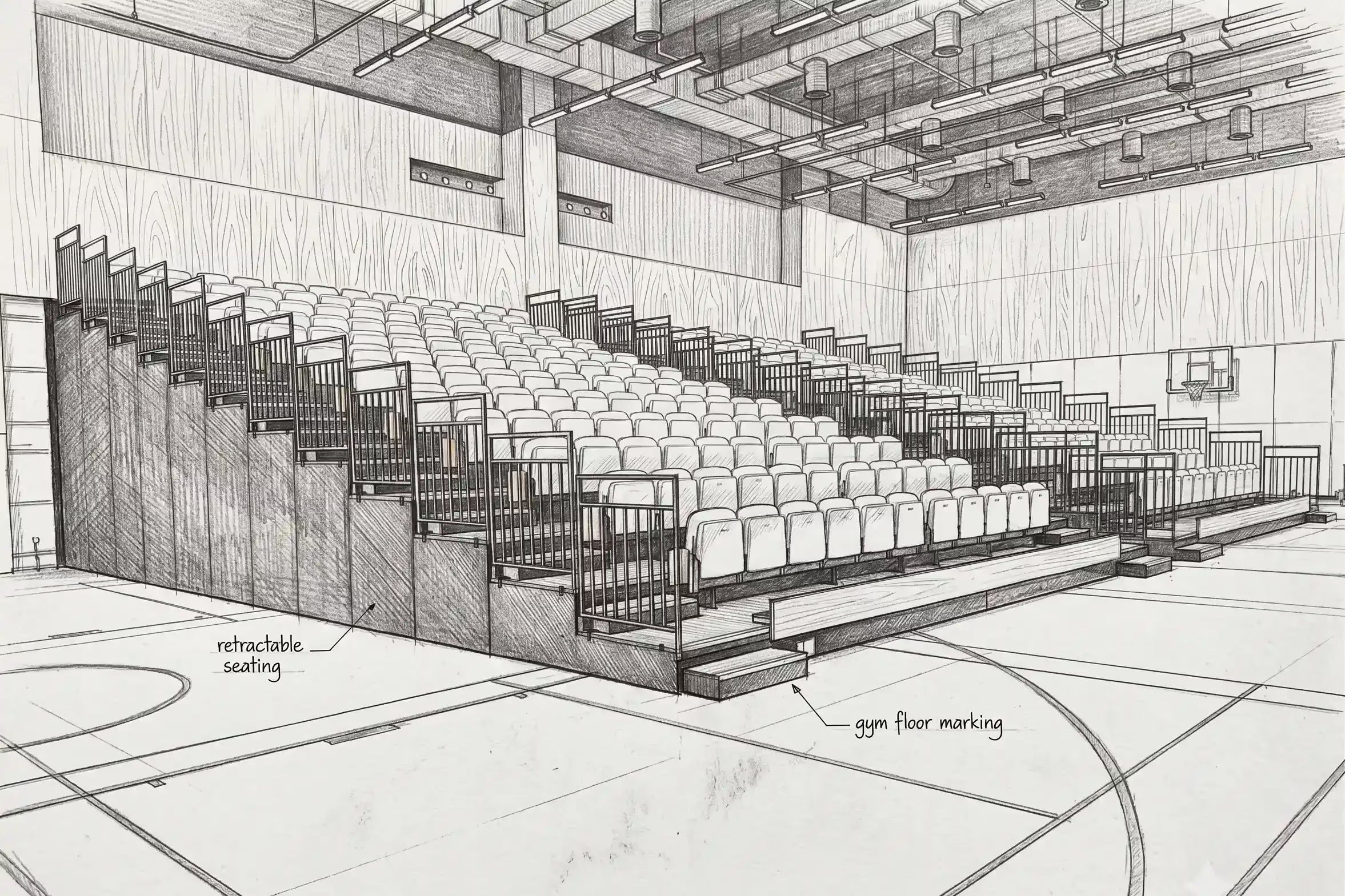
The economics are operational. A long manual bank can demand two or three staff and the better part of an hour to deploy and lock; a motorised bank travels under integrated drive in minutes, supervised by a single trained operator. For venues transforming daily — schools running assembly and sport in the same morning, arenas turning around events overnight — the saved labour repays the drive system within its service life, while the consistency of an automated cycle protects the equipment itself: controlled travel speed and even loading eliminate the misalignment and impact damage that shorten the life of manually handled banks. Where transformation is occasional rather than routine, a manual system may remain the right answer — we set out that comparison in our companion article on Retractable Seating.
2. Drive Systems and Operation
Motorised systems move the bank, the seats or both:
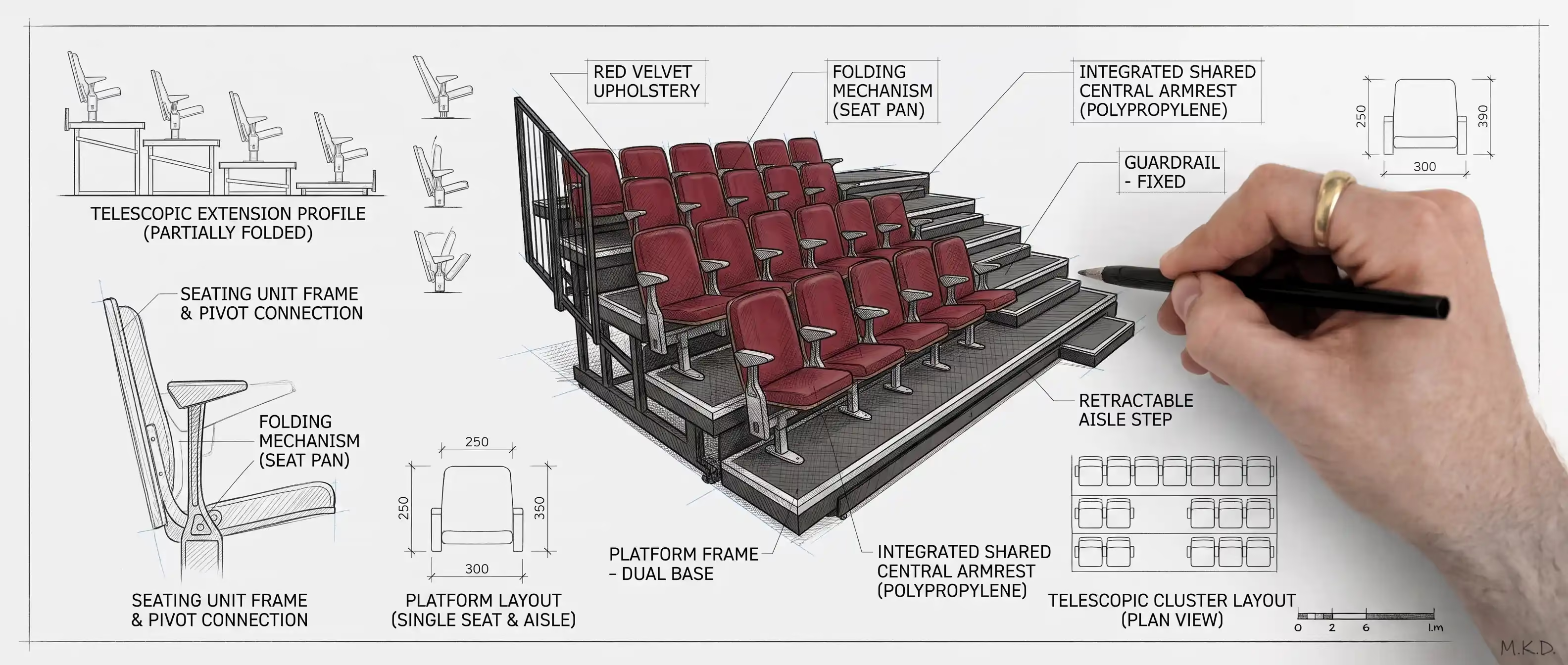
- Bank travel: friction-wheel or rack-driven units powered from the lowest platform, extending and retracting the full bank under integrated drive; typical travel speeds are set low deliberately, prioritising control over pace.
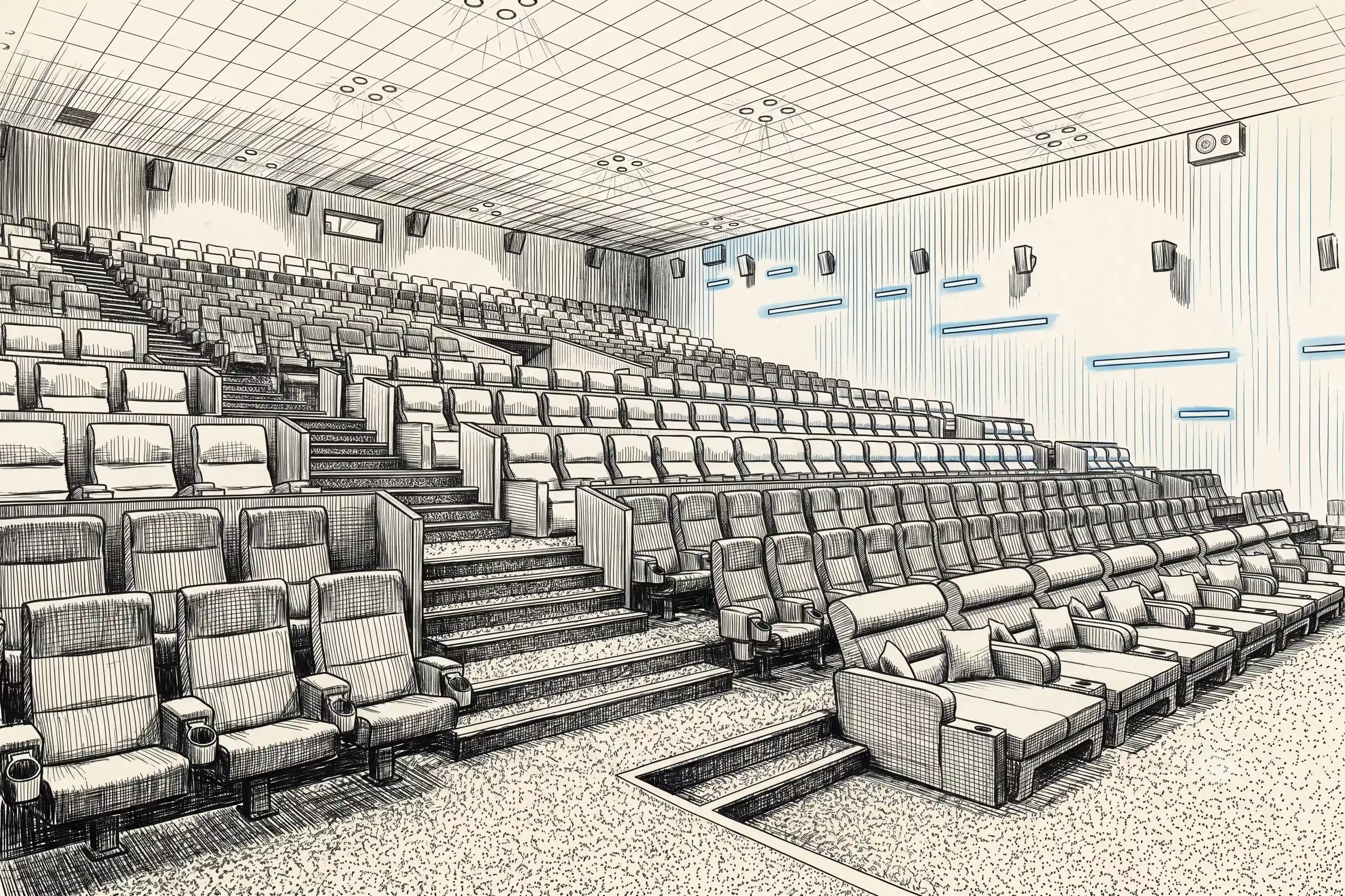
- Automatic seating: tip-up or fold-down seats that raise and lower automatically as the bank opens and closes — removing the row-by-row manual step that dominates deployment time on large installations.
- Controls: operation from a wired pendant or key-switch station positioned in sight of the full bank; hold-to-run control as standard, so travel stops the instant the operator releases the control.
- Power and positioning: end-of-travel sensing, positive automatic locking in the extended position, and manual-release provision for power-failure conditions.
3. Safety and Interlocks
A moving structure of this scale is specified around the failure cases, not the demonstration:
- Occupancy protection: interlocks preventing drive operation while seats are occupied or rows are down where automatic seats are not fitted.
- Obstruction detection: sensing edges or torque monitoring that halts travel on contact with an obstruction in the travel path.
- Hold-to-run and supervision: operator must have full sight of the bank; remote or unattended operation is excluded by design.
- Standards: telescopic stands under EN 13200-5, with the drive and control system engineered to the machinery safety requirements applicable to power-operated equipment; guarding of all pinch and shear points during travel.
- Inspection regime: planned maintenance of drives, locks and sensing systems as part of the venue's statutory inspection programme.
4. Building Integration
Motorisation makes the seating bank a building services item. Power supply sizing and isolation, control cabling routes, and coordination with the venue's AV and lighting control ecosystem belong in the services design from the outset. Floor flatness and tolerance matter more than for manual systems — drive wheels demand a consistent surface — and the parked position needs both a protected zone and, in many venues, a secure means of preventing unauthorised operation. Where banks recess into wall pockets or garages, ventilation and access for maintenance complete the picture. The motorised retractable seating systems we specify are selected with this whole-building integration in mind.
5. The Acoustic Dimension
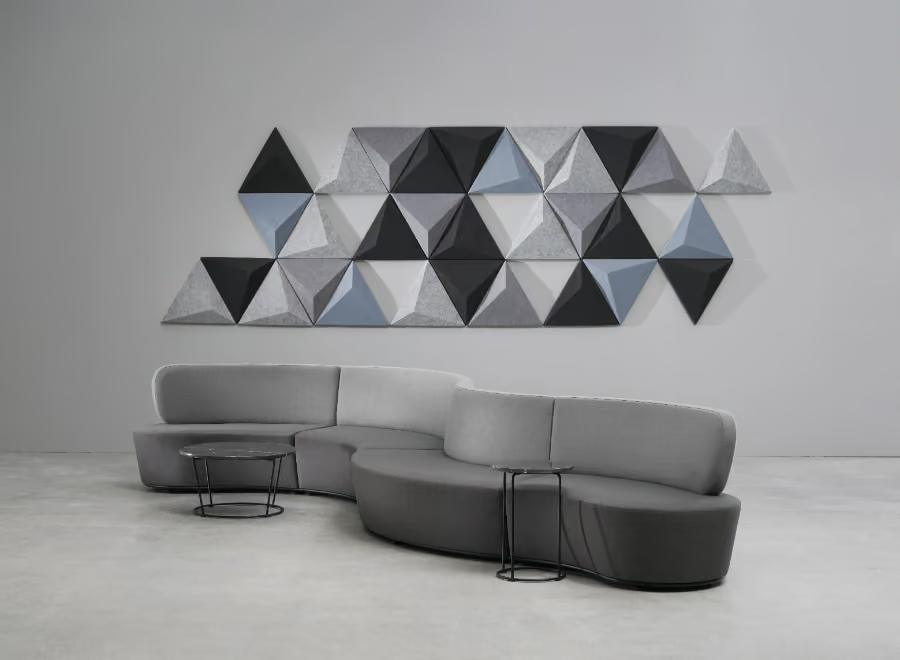
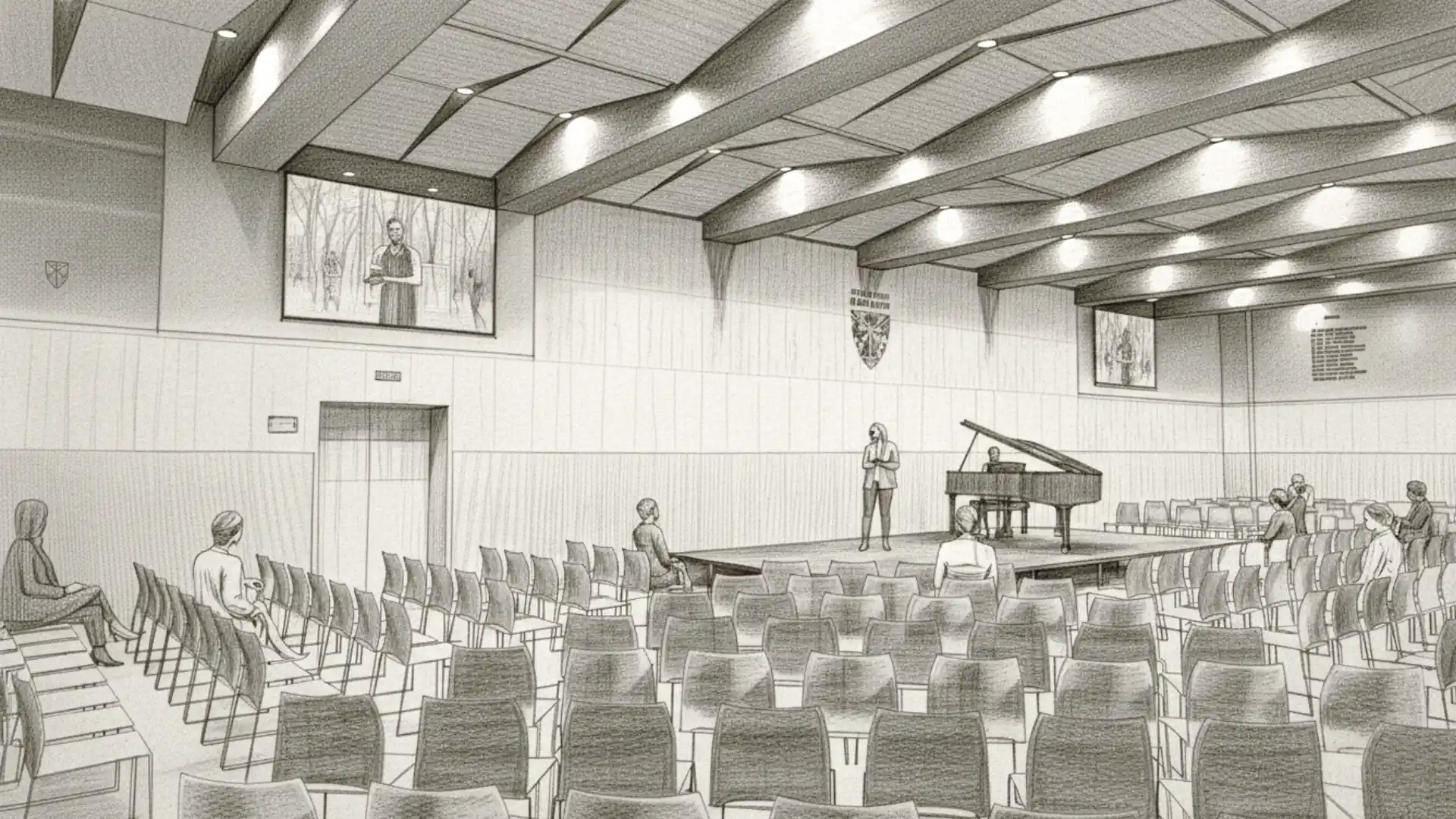
Everything said of retractable seating acoustics applies here — the hall is two acoustic rooms, and the seating bank sets the absorption of the auditorium mode — with one addition: the drive system itself. Motor and transmission noise matters in venues where transformation happens close to occupied spaces or during quiet building hours, and a quality drive is specified for smooth, low-noise travel. In the extended position the motorised bank should be acoustically indistinguishable from a fixed installation: rigid, rattle-free under audience movement, with upholstery build-ups reviewed against the room's acoustic model exactly as for fixed seating.
6. Bringing It Together
Motorised retractable seating turns the multi-purpose hall's central promise into a daily routine — but only when drives, controls, safety systems and acoustics are specified as rigorously as the structure itself. If your venue transforms often enough that the transformation deserves automation, we would be glad to review the system alongside the room's acoustic design — contact us to discuss your project.
.webp)