
Multipurpose Hall Design — Designing for Flexibility and Performance
Introduction
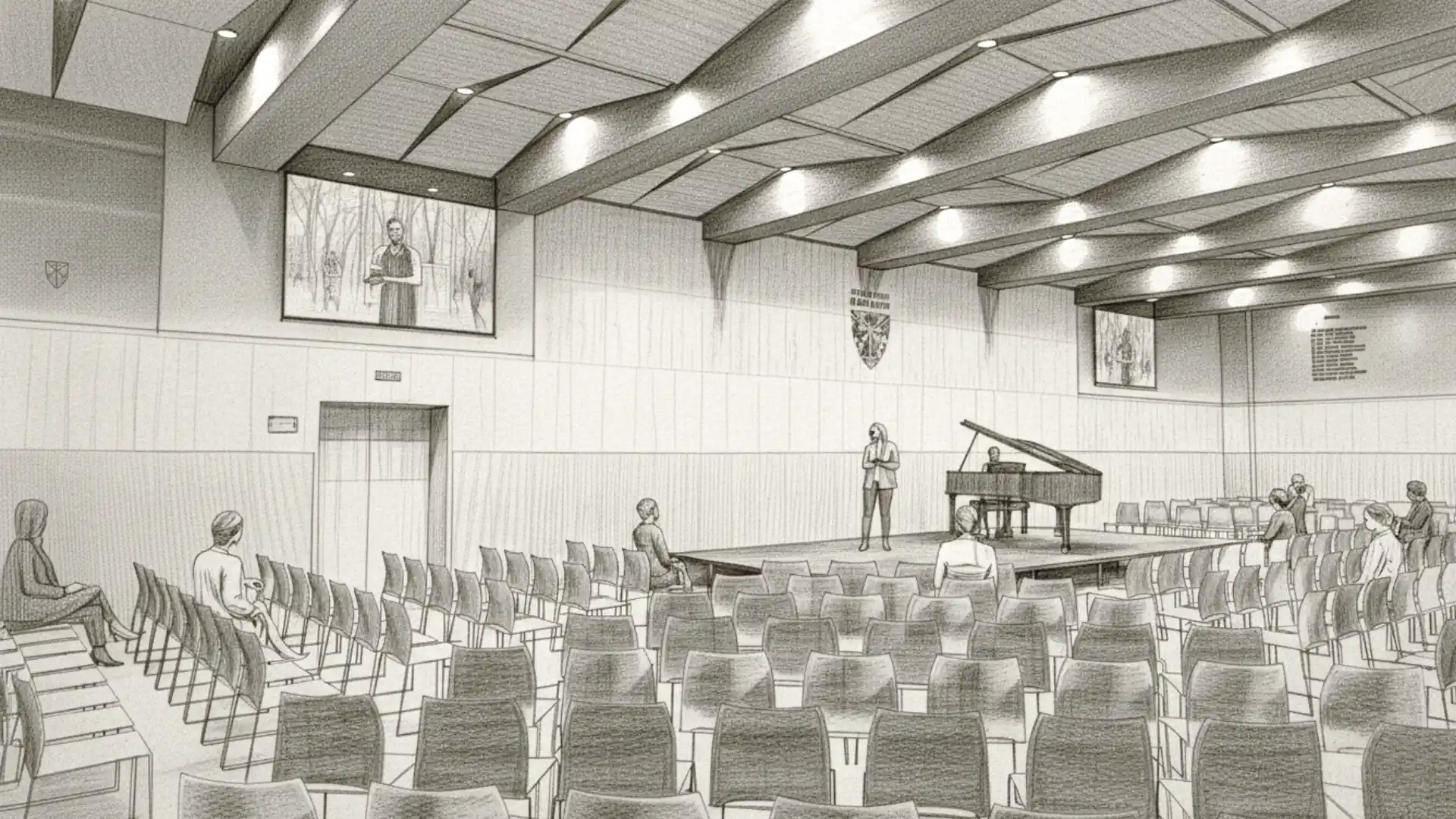
A multipurpose hall is often expected to serve as the civic heart of a building—hosting assemblies in the morning, sport in the afternoon, and a performance or community event in the evening. That versatility is its strength, but it is also the design challenge. Unlike a theatre or cinema, where the room can be tuned for a single mode of use, a multipurpose hall must cope with changing layouts, changing occupancy, and changing acoustic demands—without losing comfort, clarity, or atmosphere. Research into multipurpose venue upgrades consistently returns to the same core problem: balancing speech intelligibility with musical clarity by controlling reverberation and reflection behaviour across different event types.
Explore the full guide below, and for more expert insights, subscribe to our newsletter or contact us to discuss tailored solutions for your space.

1. Description of Multipurpose Halls
A multipurpose hall is a high-capacity room designed to support varied activities—often with minimal downtime between uses. In practice, multipurpose halls tend to fall into a few recognisable types:
- Education halls supporting assemblies, dining, PE, examinations, drama, and presentations
- Civic and community halls used for meetings, celebrations, exhibitions, and local events
- Corporate and institutional halls for briefings, town halls, training, and formal receptions
- Worship and cultural halls that switch between spoken word, music, and ceremonial gatherings
- Sports-led halls that also need to host non-sport events without feeling like a gymnasium in disguise
What makes these spaces difficult is not simply the range of functions, but the way the room behaves when the use changes. Seating might be stacked one day and fully deployed the next. A “front” may not exist, or the stage may be temporary. Large, hard surfaces—sports floors, durable wall linings, high ceilings—can push the room towards excessive reverberation unless the acoustic strategy is designed in from the beginning. Case-based studies on multipurpose halls underline the same point: achieving “good for everything” requires variable strategies, not a single fixed acoustic condition.
2. Architectural Design for Multipurpose Halls
The architectural design of a multipurpose hall is not only about maximising usable area. It is about creating a volume that can be reconfigured quickly, read clearly from multiple orientations, and still maintain predictable acoustics.
Auditorium Shapes and Multipurpose Geometries
Many multipurpose halls default to large square or rectangular footprints because they simplify planning, allow multiple layouts, and support sports markings and equipment. The downside is that parallel surfaces and long uninterrupted walls can increase flutter echo and uneven reflections unless you deliberately introduce diffusion, breaks in geometry, or variable absorptive elements. Where operable partitions are used to create smaller rooms, the partition line itself becomes part of the acoustic design—not just a planning device.
Volume and Proportion
Because event types vary, multipurpose halls benefit from proportions that avoid extreme acoustic behaviour. A very tall, hard-surfaced volume may suit sport but become problematic for speech. Conversely, over-treatment for speech can make music feel dry and unsupported. The architectural aim is to create a neutral, controllable baseline—a room that can be tuned rather than a room that fights back. Multipurpose hall case studies frequently highlight the need to manage low-frequency build-up in robust constructions (for example, concrete-heavy shells), reinforcing the importance of early material and volume decisions.
Entry and Circulation Design
Multipurpose halls often experience peak loads that are different from theatres: rapid arrival for assemblies, fast turnover between bookings, and high movement during sport or community use. Circulation should be designed for flexibility, not a single “best” seating plan.
- Clear aisle logic and unobstructed routes that still work when layouts change
- Transitional space at entrances to absorb crowding and reduce bottlenecks
- Accessible routes planned from the outset, so reconfigurations do not compromise inclusion
UK good-practice guidance for arts and cultural buildings references BS 8300 dimensions and highlights circulation widths around 1200 mm where practical, supporting inclusive movement in public venues.
3. Seating Layout and Spatial Flexibility
In multipurpose halls, seating is rarely just “the seating”. It is part of the hall’s operational identity—how quickly the room changes, how clear sightlines remain, and how the acoustic character shifts with occupancy.
Moveable Seating Strategies
Common approaches include:
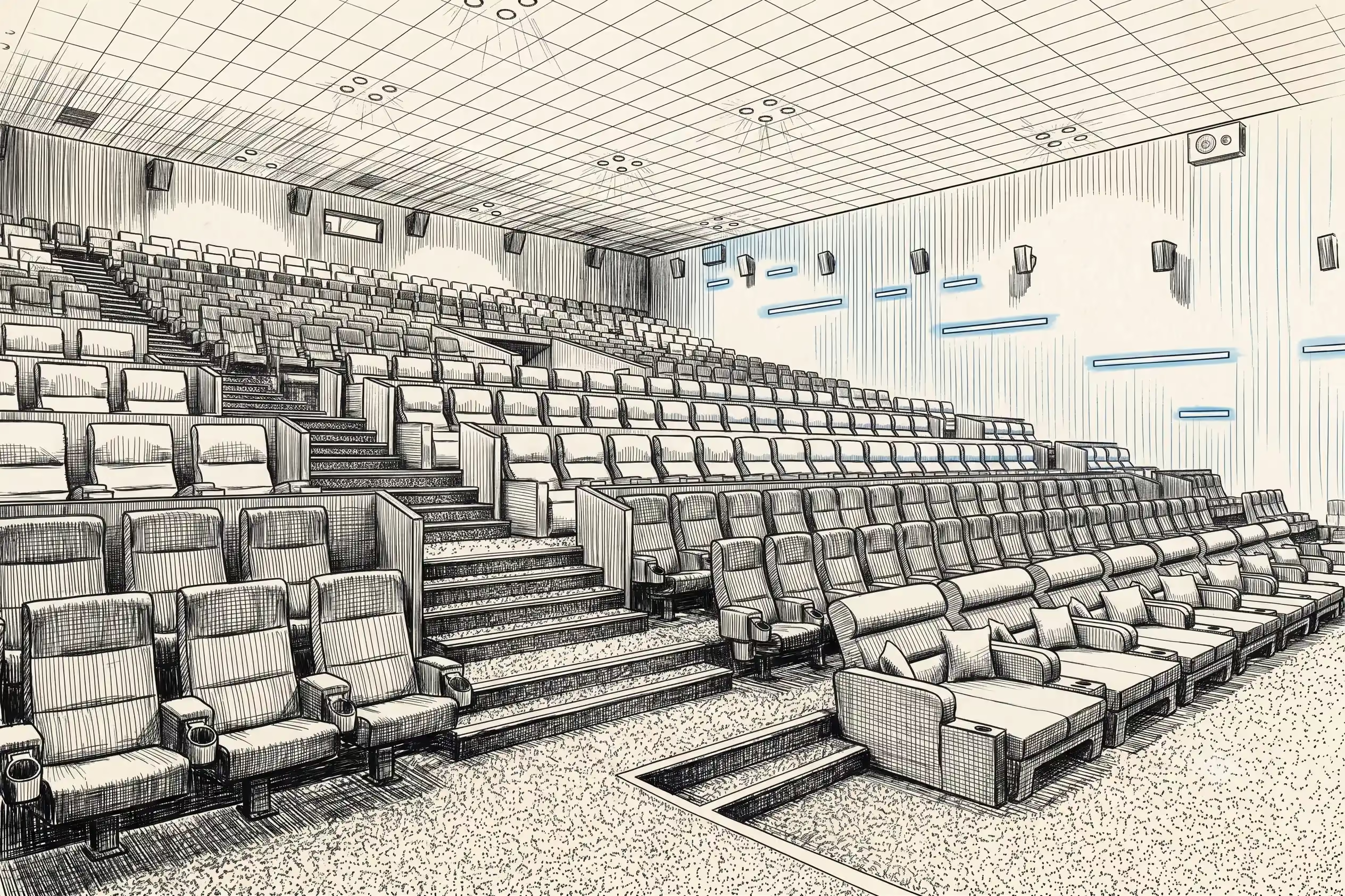
- Stackable upholstered seating for rapid set-ups and removals
- Linkable or ganged seating to stabilise rows and improve circulation control
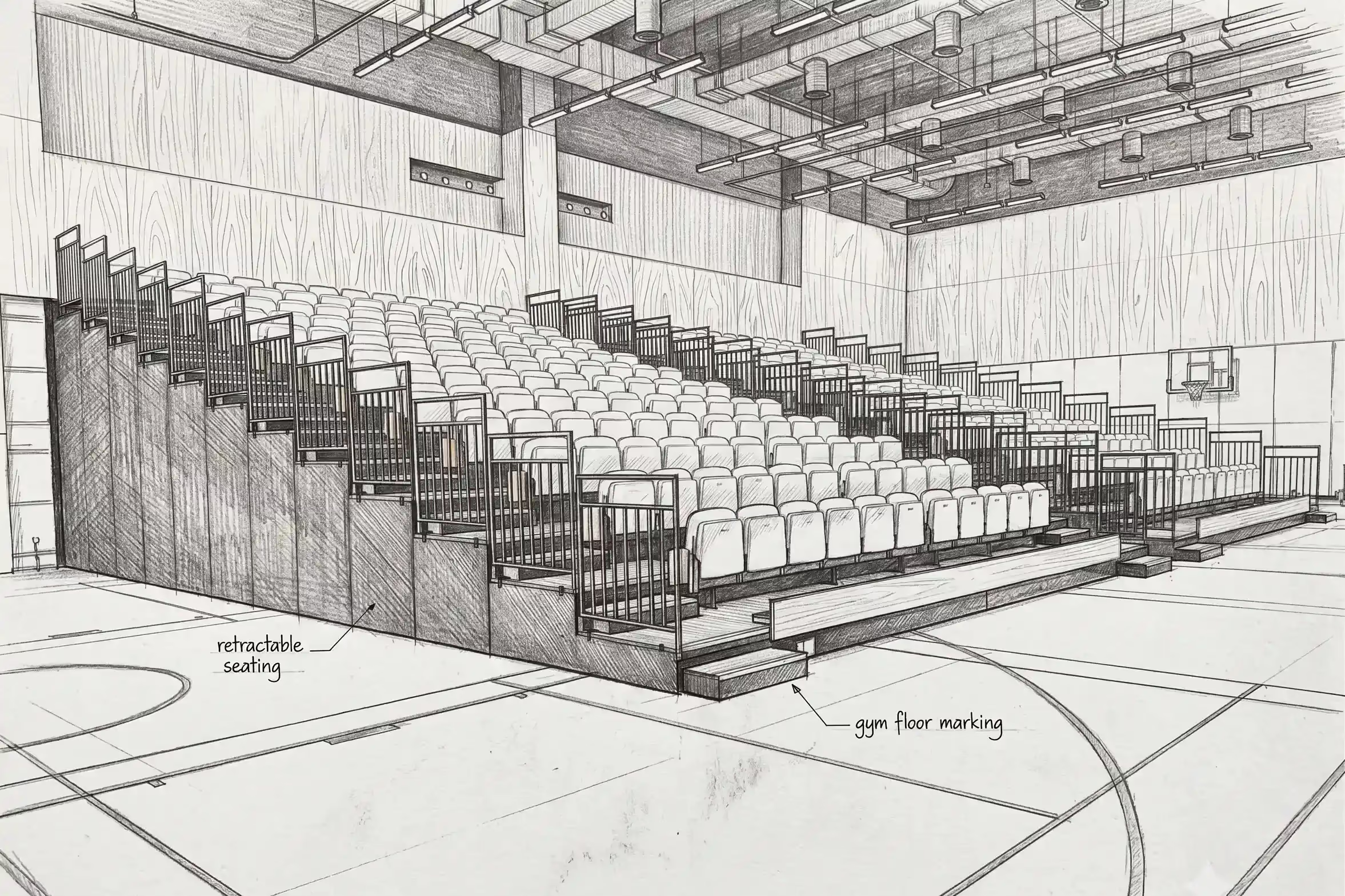
- Telescopic (retractable) seating to switch between flat-floor and raked-audience modes
- Hybrid layouts combining fixed perimeter benches with mobile seating in the core
A practical rule is that flexibility must not create daily friction. If storage is undersized, chair handling is awkward, or access routes are compromised, the “flexible” hall becomes operationally rigid.
Sightlines, Spacing, and Reconfiguration
Even when seating is not fixed, the hall still needs reliable geometry for “audience-facing” modes: assemblies, presentations, performances, screenings. This means designing:
- Clear focal orientations (and secondary orientations where needed)
- Storage zones that do not cut across audience routes
- Floor infrastructure—power, data, floor boxes—located so multiple layouts remain viable
Where retractable seating or modular platforms are used, integrate their footprint early so circulation widths and accessible seating positions are not retrofitted later.
4. Interior Design for Multipurpose Halls
The interior of a multipurpose hall is typically asked to do two things at once: withstand heavy use and still feel like a considered public space. The key is to treat interior design as part of the hall’s performance system, not a finish applied after planning.
Interior Geometry and Perception
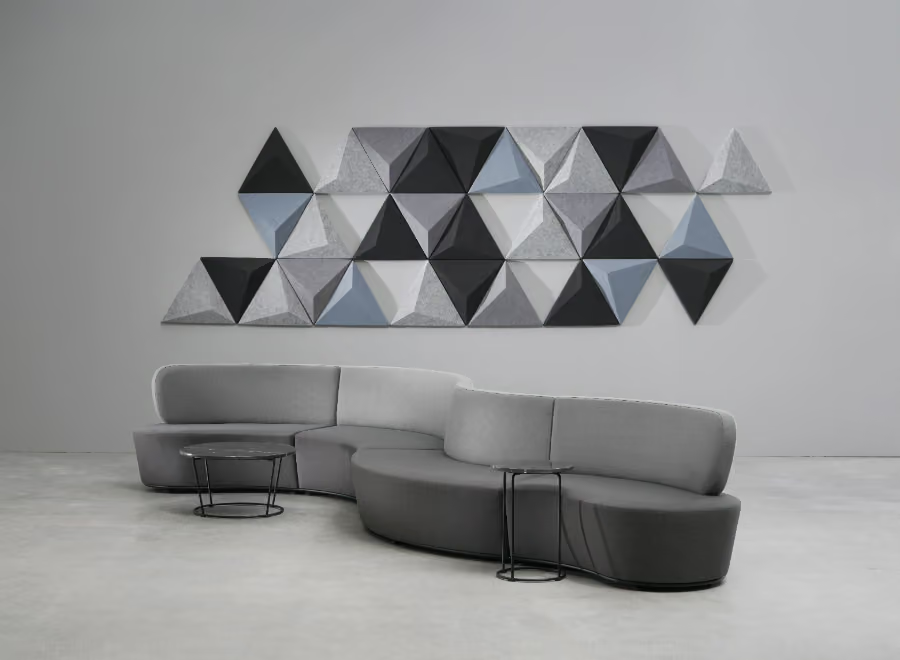
Walls are often the closest surfaces to the audience and therefore the strongest contributors to perceived quality—visually and acoustically. Strong interiors in multipurpose halls use controlled rhythm: panel modulation, changes in depth, and purposeful breaks that reduce acoustic predictability and improve spatial character.
Walls and Ceilings
Wall and ceiling systems should be specified as one joined decision, balancing:
- Durability (impact resistance, cleanability, long-life finishes)
- Acoustic function (absorption, diffusion, and—when required—variable systems)
- Visual clarity (a calm identity that works across different event types)
Lighting and HVAC Integration
Lighting must support both high-activity and presentation modes: uniform, glare-controlled general lighting and controllable layers for performance and speech events. HVAC design should prioritise comfort without becoming a noise source; a multipurpose hall that is acoustically “fixed” but mechanically loud will fail in real use.
5. Acoustic Design for Multipurpose Halls
Multipurpose halls demand a different acoustic mindset: you are not chasing one “perfect” reverberation time, but a controlled range that supports different conditions. Technical literature and case studies emphasise the central challenge: maintaining intelligibility for speech while retaining sufficient support for music and performance, often requiring variable solutions rather than static absorption.
Variable Acoustic Solutions
A robust approach typically combines:
- Passive variability (curtains, banners, movable absorbers, repositionable diffusers)
- Zoned strategies (different acoustic behaviours in different parts of the room)
- Electro-acoustic enhancement where the brief demands it
Research reviews and technical papers note that electro-acoustic enhancement systems have become a practical tool for creating variable acoustics in multipurpose venues, particularly when architectural constraints limit purely passive solutions.
Speech, Music, and Hybrid Events
The objective is not to make every event sound identical. It is to ensure each event sounds intentional. That means controlling early reflections for clarity, managing excessive reverberation that blurs speech, and avoiding an over-absorbed “dead” condition that removes energy from performance modes.
Noise Isolation
Because multipurpose halls often sit inside busy buildings—schools, community centres, leisure facilities—noise isolation must address both airborne and structure-borne noise. Adjacent corridors, plant rooms, and sports activity zones can undermine the hall’s perceived quality if the separation strategy is not designed early.
6. Materials for Multipurpose Halls
Material selection in multipurpose halls is about consistent performance under changing use.
- Audience flooring: often requires impact resistance and easy maintenance; consider how the floor behaves acoustically when the room is set for speech versus sport
- Wall linings: must handle wear while contributing to acoustic control; impact-resistant acoustic wall systems often outperform soft finishes in high-activity halls
- Ceiling systems: should combine acoustic function with integrated services access, especially when the hall supports varied technical set-ups
- Seating upholstery (where used): durability and fire performance are non-negotiable; acoustic contribution should be considered as part of the occupancy model
7. Stage and Platform Design for Multipurpose Halls
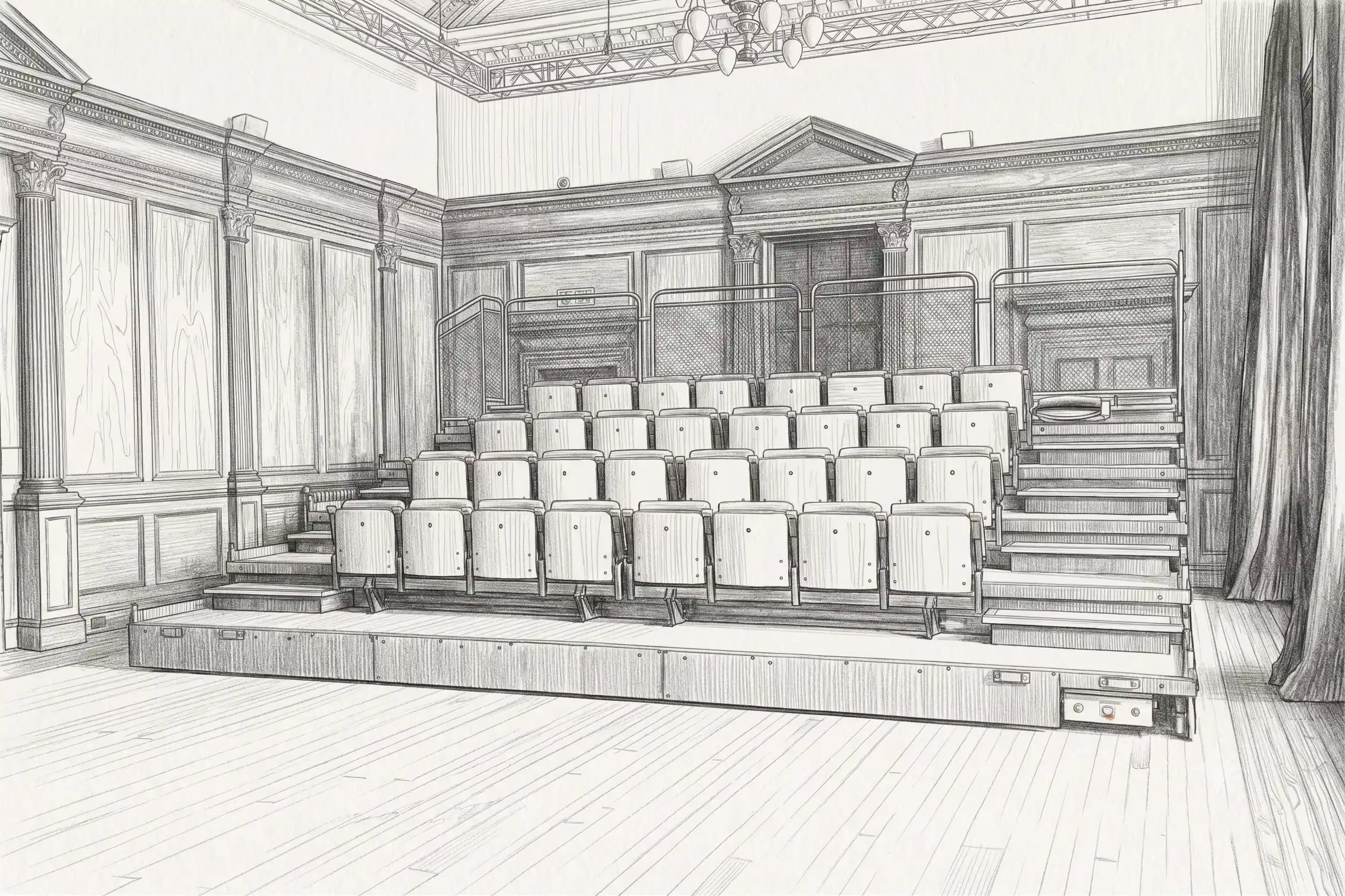
Multipurpose halls rarely have a single fixed stage requirement. Some need a permanent platform; others need a modular system that can be deployed only when required.
- Modular staging enables performance mode without stealing daily usable area
- Temporary backstage planning can be achieved through storage strategy, side access routes, and curtaining
- Rigging and suspension points (where needed) should be designed as a safe, planned system—not improvised with ad-hoc fixings
This is where multipurpose thinking matters most: stage capability should exist as a ready-to-use layer, not a disruptive event-by-event build.
8. Professional Audio, Video, and Lighting Design for Multipurpose Halls
A multipurpose hall’s technical systems must be designed for change—without becoming messy, visible, or unreliable.
- Audio: speech reinforcement and music playback require different behaviours; the system design should support both without constant re-tuning
- Video: screens, projection, and display positions should work across multiple orientations where the hall is frequently “turned”
- Lighting: controllable scenes are essential; the difference between “sports bright” and “presentation calm” should be immediate and repeatable
- Infrastructure: power and data distribution is the hidden determinant of flexibility—if access points are poorly planned, every reconfiguration becomes a compromise
Where appropriate, the solution is not “more equipment”, but a better integrated system logic.
Conclusion
Multipurpose halls succeed when flexibility is treated as a design discipline, not a planning slogan. The best halls are not simply empty rooms that can be filled in different ways; they are spaces with a clear architectural baseline, a controlled acoustic strategy, interiors that withstand real use, and technical systems that make change feel effortless. When those layers align, the hall becomes a reliable performance environment—capable of shifting between everyday activity and high-impact events without losing clarity, comfort, or identity.
.webp)